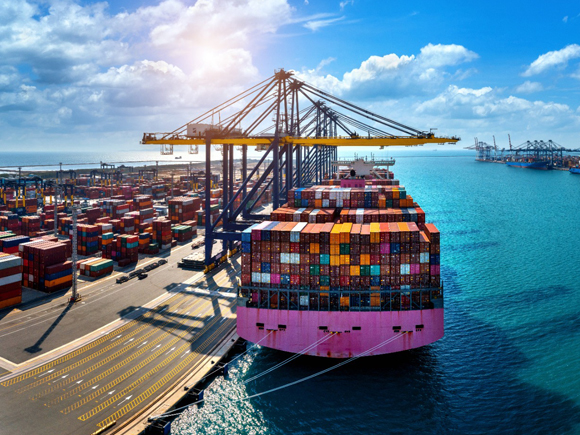
The track on trade aims to create and develop resilient Global Value Chains (GVC) to influence the future of the global trading order. Geopolitical and geoeconomic changes have resulted in shifts in both regional and multilateral value chains towards diversification for goods and services products.
During this period of adjustment, discussions among leaders in the private and public sectors at this year’s Partnership Summit 2025 will explain the direction of Trade 4.0 and the increasing role of technology in global trade.
As the Global South emerges as a rising economic power, the financing and support of development in these emerging markets remain critical points of discussion and attention. In this evolving global landscape, India has the potential to serve as an economic bridge by finalizing free trade agreements (FTAs). Such agreements would not only benefit Indian firms and consumers but also position the country as a pivotal element in the global economic ecosystem, making it a resilient partner for global firms to integrate into their trade frameworks.
×
×
Future of Industrialisation
The emergence of Industry 5.0, which centers around the incorporation of advanced technologies like automation and artificial intelligence to improve productivity, has significantly accelerated global economic progress. To capitalize on this technology-led economic transition, governments are implementing industrial reforms while private sector firms are simultaneously investing in developing these emerging and advanced technologies.
Therefore, to better position national economies in the Industry 5.0 era, the private and public sector of countries like India must work in tandem to cultivate a congruent environment for these Industry 5.0 technologies. At the same time, Industry 5.0 will disrupt global labour markets in the age of automation, which may lead to displacement and eventual need for reskilling in the global labour force.
Finally, to better increase the growth of regional and multilateral industrial connectivity, global and sub-national industrial corridors could be developed to improve efficiency in Industry 5.0 and better connect partners.
×
×
SUSTAINABILITY AND CLIMATE ACTION
The intensifying impact of climate change is disrupting natural ecosystems, threatening livelihoods, and testing the resilience of economies across the globe. In response, countries are increasingly integrating sustainable development into their core economic strategies. Collaborative action between governments and industry is essential to accelerate the adoption of sustainable practices, support ecological preservation, enable the transition to low-carbon economies, and enhance overall resilience. Such partnerships also unlock access to finance and technology, build capabilities and capacities, and improve trade and competitiveness.
However, emerging economies face growing pressure from tariff regimes, rising emissions, and ecological degradation-factors that risk creating trade barriers and economic strain. A balanced, forward-looking approach is critical to ensure that sustainability and climate goals are met without compromising competitiveness and growth. Discussions under this track will explore strategic opportunities arising from collective sustainability, blue economy finance and climate initiatives, highlighting pathways for inclusive and resilient development.
×
×
Technology and Innovation
Innovative technologies like India’s Digital Public Infrastructure (DPI) are rapidly transforming financial accessibility and settlements within and between nation-states. India has become a global leader in DPI through the India Stack, an open Application Programming Interface (API), through frugally investing in inclusive platforms like the Unified Payments Interface (UPI).
India could leverage its strength in DPI through expanding UPI to significant bilateral trading partners to increase cohesion in the global economy and increase permeance of financial technologies in the future global financial ecosystem.
Moreover, to compete globally in advanced and frontier technologies, India and its partners must invest significantly in enhancing capacity for research and development (R&D) initiatives to compete in global growth sectors like artificial intelligence and automation.
×
×
Growth
The global economic outlook has been significantly affected by the COVID-19 pandemic and regional conflicts in key areas. This situation has compelled governments, industries, and central banks worldwide to navigate a new growth trajectory within a high inflation and interest rate environment.
Furthermore, supply shocks caused by overreliance on specific trade partners have led the global community to make a deliberate effort to diversify and mitigate risks in global value chains. This shift has provided countries such as India and its partners with opportunities to enhance their competitiveness and participation in the Global South.
The current period of global geoeconomic rebalancing provides an opportunity for the global financial ecosystem as well as institutions to be reformed to become more inclusive of global economies, particularly those in the Global South. As a prominent emerging economy, India is significantly investing in building out the infrastructure to stimulate growth and increase its participation and shaping the future of global economic order alongside its multilateral partners.
×
×
Geoeconomic Framework
As mentioned before, the global geoeconomic framework that governs commercial flows between nations is being reformed, which is spurring the development of new growth centers in a new multipolar world. In turn, this has significantly influenced the geoeconomic outlook for 2025 and beyond.
Defined as World 2.0, new multipolar dynamics will define the geoeconomic environment which may pose trade disruptions in the short run and divert and redirect global supply chains in the long term.
×
×
Inclusion
Despite progress made over the past few decades, global leadership needs to promote intentional inclusive development to incorporate marginalized groups and increase their participation in the global economic system. Increasing the participation of women in the global economic system remains a significant priority of inclusive international development, which will shape the shape the future of employment, education, employability, and entrepreneurship.
Businesses play a significant role in promoting corporate actions to increase the inclusivity of their firms and their industries, which may be carried out through dedicated programs that increase mobility for underserved communities, particularly in countries like India. One potential path that industries and governments that countries like India and their partners could take is promoting skill development to uplift and upskill workers into higher value industries. Moreover, by supporting startups, governments could provide new avenues and industries to employ people across backgrounds, which would increase the quality of livelihood for these people.
Confederation of Indian Industry (hereinafter “CII”) collects personal data from you when you request information from CII and provide your information when you fill out a subscription form or opt in to receive emails from CII. Personal data may include your name, e-mail address, title, occupation, company or university affiliation, industry, region/country or any other background information which you choose to share with CII. By browsing our websites and sending us information, you explicitly consent to CII processing your personal data in accordance with this Privacy Policy. CII will use your personal data to fulfil your request, provide you with the information you requested and/or send you marketing communications. CII may collect personal data and may disclose such information to third party service providers in aggregate for marketing and promotional purposes. However, in these situations, we do not disclose to these entities any information that could be used to personally identify you. We shall retain your personal data for as long as needed to handle your request or as long as we have a relationship with you.
Disclaimer
While every precaution has been taken in the preparation of this website and its contents, Confederation of Indian Industry (CII) assumes no responsibility for errors or omissions. All information and features described herein are subject to change without notice. This website may contain links to third-party websites. CII is not responsible for the contents of any linked site or any link contained in a linked site. This website is providing these links only as a convenience, and the inclusion of a link does not imply endorsement of the linked site by CII.
Without limiting the rights under the copyright reserved, this website or any part of it may not be translated, reproduced, stored, transmitted in any form (electronic, mechanical, photocopying, audio recording or otherwise) or circulated in any binding or cover other than the cover in which it is currently published, without the prior written permission of CII. All information, ideas, views, opinions, estimates, advice, suggestions, recommendations (hereinafter ‘content’) in this publication should not be understood as professional advice in any manner or interpreted as policies, objectives, opinions or suggestions of CII. Readers are advised to use their discretion and seek professional advice before taking any action or decision, based on the contents of this publication. The content on this website has been obtained or derived from sources believed by CII to be reliable but CII does not represent this information to be accurate or complete. CII does not assume any responsibility and disclaims any liability for any loss, damages, caused due to any reason whatsoever, towards any person (natural or legal) who uses this publication. This information/content cannot be sold for consideration, within or outside India, without express written permission of CII. Violation of this condition of sale will lead to criminal and civil prosecution.
Published by Confederation of Indian Industry (CII), The Mantosh Sondhi Centre; 23, Institutional Area, Lodi Road, New Delhi 110003, India, Tel: +91-11-24629994-7, Fax: +91-11-24626149; Email: info@cii.in; Web: www.cii.in